
Texas homebuyers finally have some good news to work with in an otherwise challenging rate environment: the U.S. Department of Housing and Urban Development (HUD) has increased FHA loan limits for 2026, giving borrowers more purchasing power in nearly every county across the state. At the same time, mortgage rates have climbed to multi-year highs, making it more important than ever to understand exactly how much home you can finance with an FHA loan and what that means for your monthly payment.
Here’s what changed, which Texas metro areas got the biggest bump, and how to position yourself to qualify in today’s market.
What Changed for 2026 FHA Loan Limits in Texas
Each year, HUD recalculates FHA forward mortgage limits based on changes in the national conforming loan limit set by the Federal Housing Finance Agency. For 2026, HUD’s nationwide mortgage limits guidance set the FHA “floor” for standard-cost counties at $541,287 for a one-unit home, up from the prior year. Higher-cost metro areas, where home prices run above the national median, qualify for limits above that floor, up to the national ceiling.
These limits took effect January 1, 2026, and will remain in place through the end of the year. Because FHA loans remain one of the most popular financing options for first-time and repeat buyers in Texas, thanks to low down payment requirements and flexible credit guidelines, this annual adjustment directly affects affordability statewide.
2026 FHA Loan Limits by Texas Metro Area
FHA loan limits vary by county and are tied to local home prices. Based on the current HUD schedule, one-unit FHA limits in several major Texas markets include:
- Dallas-Fort Worth area: approximately $563,500
- Austin area: approximately $571,550
- San Antonio area: approximately $557,750
- Standard-cost Texas counties (including most of the Rio Grande Valley and many rural counties): $541,287
Limits are higher for two-, three-, and four-unit properties, which can matter for buyers considering a duplex, triplex, or fourplex as an owner-occupied purchase. Because limits are set at the county level, it’s worth confirming the exact figure for your target ZIP code before you start shopping, since neighboring counties in the same metro can sometimes fall into different cost tiers.
Why FHA Loan Limits Matter for Texas Buyers
FHA loan limits function as a ceiling on how much you can borrow using FHA financing, not a target you need to hit. Still, understanding the cap matters for a few reasons:
- Higher limits mean more homes qualify. As home prices have risen across Texas metros, a higher limit keeps mid-priced homes within reach of FHA financing rather than pushing buyers into jumbo or nonconforming loan products.
- Down payment math stays favorable. FHA loans allow down payments as low as 3.5% for borrowers with qualifying credit scores, per the Consumer Financial Protection Bureau’s overview of FHA loans. On a $500,000 purchase, that’s the difference between needing roughly $17,500 down versus the 20% many conventional loans effectively require to avoid mortgage insurance.
- Credit flexibility remains a draw. FHA guidelines generally accommodate lower credit scores and higher debt-to-income ratios than conventional financing, which is one reason the program remains popular with first-time buyers statewide.
Buyers who want a clear breakdown of current limits, minimum credit scores, and documentation requirements by county can review a Texas FHA loan overview that tracks program updates specifically for Texas borrowers.
Rising Mortgage Rates Add Pressure to Affordability
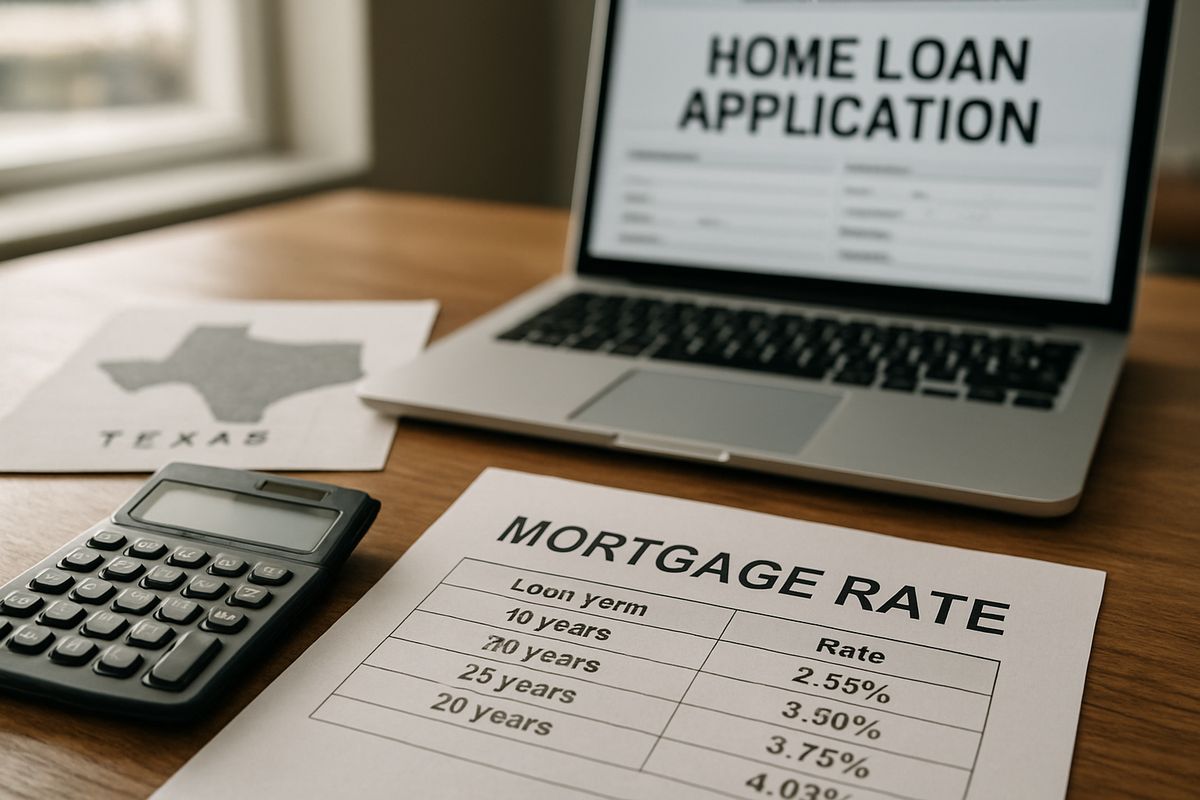
The higher loan limits arrive at a complicated moment for rates. Recent data compiled by Forbes Advisor’s Texas mortgage rate tracker shows that rates in Texas have trended upward over the past several months, mirroring the national pattern of 30-year fixed rates hovering in the high-6% to 7%-plus range. That combination, bigger loan limits but pricier borrowing, means the monthly payment math deserves careful attention.

For example, a buyer financing near the new Dallas-Fort Worth FHA limit of roughly $563,500 will see a meaningfully different payment at 6.9% versus 7.2%, even before factoring in FHA’s required upfront and annual mortgage insurance premiums. This is why many loan officers recommend getting a current rate quote and full payment breakdown, including taxes, insurance, and mortgage insurance premiums, before assuming a maximum purchase price based on loan limits alone.
How to Qualify for an FHA Loan in Texas
FHA loans remain accessible to a wide range of borrowers, but lenders still verify several key factors:
- Credit score: Many lenders require a minimum of 580 for the 3.5% down payment option, though some accept scores as low as 500 with a larger down payment.
- Debt-to-income ratio: FHA guidelines generally allow higher DTI ratios than conventional loans, but lenders will still scrutinize your total monthly obligations relative to income.
- Property condition: FHA-insured homes must meet HUD’s minimum property standards, as verified by an FHA appraisal, so fixer-uppers may need repairs completed before closing or qualify for a 203(k) renovation loan.
- Occupancy: FHA loans are intended for primary residences, not investment or vacation properties.
Steps to Take Now
If you’re planning to buy in Texas in the months ahead, a few practical steps can help you take advantage of the new limits without getting caught off guard by rate movement:
- Confirm the exact FHA loan limit for the county you’re shopping in, since limits can differ even between adjacent counties in the same metro area.
- Get pre-qualified with an FHA-approved lender to see your real, current-rate monthly payment, not a rate from several months ago.
- Ask about rate locks and temporary buydowns, which some lenders offer to help offset short-term rate volatility.
- Review your credit report early, since even modest score improvements can affect your interest rate and mortgage insurance costs.
The 2026 increase in FHA loan limits gives Texas buyers more room to work with, particularly in fast-growing metros like Austin and Dallas-Fort Worth. But with rates elevated compared to recent years, the smartest move is to pair that higher limit with a clear-eyed, current picture of your monthly payment. Talk with a qualified FHA lender about your county’s specific limit, your credit profile, and today’s rates before you set your home-search budget, so you can shop with confidence and avoid surprises at the closing table.
